
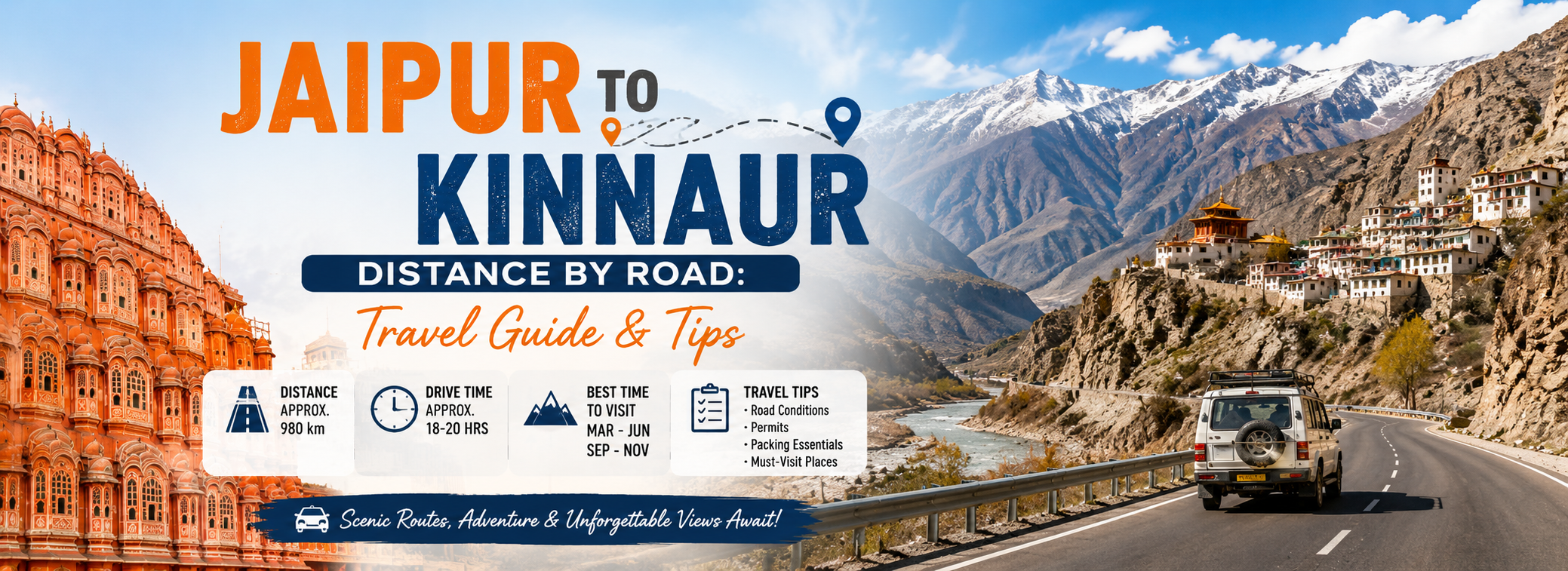
Plan a Memorable Road Trip from Jaipur to Kinnaur with Luxury Urbania Rental
There are hill stations, and then there is Kinnaur. If you have done Shimla, ticked off Manali, and felt like most mountain destinations in North India are starting to blur into the same crowd-and-cable-car formula, Kinnaur is the answer to that feeling. This is not a polished tourist destination — it is raw, dramatic, occasionally terrifying, and completely unlike anything else you can reach from Jaipur by road.
Kinnaur is a district in the far eastern corner of Himachal Pradesh, bordering Tibet. The landscape here shifts from dense alpine forest to near-desert high altitude terrain within a few kilometres. The people follow a unique blend of Hindu and Buddhist traditions. The roads, in places, are carved directly into vertical cliff faces with nothing but a river gorge hundreds of metres below. And the views — of peaks like Kinnaur Kailash, Raldang, and Jorkanden — are the kind that make experienced Himalayan travellers stop and stare.
The Jaipur to Kinnaur distance by road is significant, but for the right traveller, every kilometre of it is worth it.
Jaipur to Kinnaur Distance by Road — Key Numbers
| Details | Information |
|---|---|
| Total Distance | 750 – 850 km (varies by destination within Kinnaur) |
| Estimated Travel Time | 16 – 20 Hours |
| Route Type | Highway + Narrow Mountain Roads + Extreme Cliff Roads |
| Difficulty Level | High — Experienced mountain driving essential beyond Shimla |
One thing to understand before planning: Kinnaur is a region, not a single town. The distance from Jaipur to Reckong Peo (the district headquarters) is around 780 km, to Kalpa around 790 km, and to Sangla Valley or Chitkul closer to 820–850 km. Plan your target destination first, and the distance and time will follow from there.
Why Visit Kinnaur? What Makes It Different
Kinnaur does not make it easy for you to get there. And that is precisely the point. The effort required to reach it keeps the casual crowd away, which means the places you arrive at — Sangla Valley, Kalpa, Chitkul — still feel like they belong to the mountains rather than to Instagram.
- The Indo-Tibetan cultural blend is visible in everything — the monasteries, traditional Kinnauri caps, local cuisine, and village architecture.
- Kinnaur's famous apple orchards produce some of India's finest apples. During September and October, entire hillsides turn red and golden.
- The Sutlej River Gorge offers one of the most dramatic mountain drives in India, with roads carved directly into towering cliff faces.
- Chitkul, the last inhabited village near the Indo-Tibet border, is widely regarded as one of the most beautiful destinations in the Himalayas.
Best Routes from Jaipur to Kinnaur
Route 1 – Jaipur → Delhi → Chandigarh → Shimla → Narkanda → Reckong Peo → Kalpa (Recommended)
This is the most travelled and well-supported route for the Jaipur to Kinnaur road trip. The highway stretches are fast, Shimla makes a logical overnight stop, and the road from Narkanda into Kinnaur via the Sutlej Valley is stunning.
- Distance: Approximately 790 km to Kalpa
- Road Condition: Excellent on NH-48 (Jaipur to Delhi) and NH-5 (Chandigarh to Shimla). Beyond Rampur, roads become narrow cliff-side mountain routes.
- Toll Charges: Approximately ₹900 – ₹1,200 one way
- Scenic Highlight: Wangtu Gorge and the Khab Confluence where the Sutlej and Spiti Rivers meet.
- Pros: Best road infrastructure, reliable facilities, comfortable overnight halt options.
- Cons: Heavy traffic around Shimla and challenging mountain driving beyond Rampur.
Route 2 – Jaipur → Delhi → Chandigarh → Shimla → Rampur → Sangla Valley
This route branches off before Reckong Peo and drops into the Baspa River Valley, leading directly to Sangla and Chitkul.
- Distance: Approximately 820 – 840 km
- Road Condition: Similar to Route 1 until Rampur, followed by narrower and winding valley roads.
- Best For: Travellers planning to explore Sangla Valley and Chitkul.
- Pros: Direct access to some of Kinnaur's most scenic locations.
- Cons: The Karcham–Sangla stretch is narrow and may experience weather-related closures.
Road Conditions and Difficulty Level — Be Honest With Yourself
The Jaipur to Kinnaur drive is not for everyone, and it is important to be clear about that before you plan.
- Jaipur to Chandigarh is pure highway — comfortable, fast, and completely straightforward.
- Chandigarh to Shimla on NH-5 is a well-maintained mountain road but begins the climb into serious hills. Traffic near Shimla can be slow.
- Shimla to Rampur is where the road starts narrowing and the mountains start closing in. Still manageable but demands attention.
- Rampur to Reckong Peo and beyond is where Kinnaur earns its reputation. Several stretches are carved into vertical cliff faces with deep gorges on one side and mountain walls on the other.
- Falling rocks, landslide zones, and narrow single-lane roads are common. Heavy vehicles often need passing bays to cross safely.
- Go prepared with a suitable vehicle, an experienced driver, and realistic expectations.
The Road Trip Experience — From Rajasthan's Plains to Tibet's Edge
Leaving Jaipur in the early morning, the landscape feels familiar — flat highways and desert scenery gradually giving way to the greener plains of Haryana and Delhi. The road remains easy and fast until Chandigarh.
Beyond Chandigarh, the hills begin. Small slopes turn into mountains, winding roads replace straight highways, and by the time you reach Shimla, the Himalayan experience has truly started.
The real transformation happens after Shimla. Apple orchards appear around Narkanda, the Sutlej River accompanies you through dramatic gorges, and roads cut through towering cliffs create one of the most unforgettable driving experiences in India.
Eventually the valleys widen, traditional villages appear, prayer flags flutter across the roads, and snow-covered peaks dominate the horizon. It is a journey that feels less like a road trip and more like an expedition.
Travel Options from Jaipur to Kinnaur
By Car
The best way to explore Kinnaur. An SUV with good ground clearance is highly recommended. Self-driving is possible for experienced mountain drivers, though many travellers prefer hiring a driver for added comfort and safety.
By Bus
Budget-friendly but time-consuming. Travellers usually take buses from Delhi to Shimla and then onward to Reckong Peo. The journey can exceed 24 hours and may not be comfortable for families.
By Taxi or Rental Service
For a route this long and demanding, hiring a professional taxi service is often the most practical option. Experienced mountain drivers handle the difficult stretches while you enjoy the scenery.
Luxury Urbania Rental offers outstation cab services for the Jaipur to Kinnaur route. For larger groups, Luxury Tempo Traveller rentals provide a comfortable way to travel together without managing multiple vehicles.
Places to Visit in Kinnaur
- Kalpa: Famous for breathtaking views of the Kinnaur Kailash range, ancient temples, monasteries, and spectacular sunrise views.
- Sangla Valley: A stunning valley along the Baspa River known for traditional villages, lush landscapes, and Himalayan scenery.
- Chitkul: The last inhabited village before the Indo-Tibet border and one of the most beautiful destinations in Himachal Pradesh.
- Reckong Peo: The district headquarters offering hotels, hospitals, ATMs, and access to nearby attractions.
- Nako Village: A picturesque high-altitude village near the Spiti border known for its monastery and tranquil lake.
Places to Visit on the Way
- Chandigarh: Visit the Rock Garden and Sukhna Lake if time permits.
- Shimla: Explore Mall Road, Christ Church, The Ridge, and colonial-era architecture.
- Narkanda: A scenic Himalayan town famous for Hatu Peak and panoramic mountain views.
- Rampur: An important stop for fuel, food, and supplies before entering deeper Kinnaur.
Jaipur to Kinnaur Road Trip Itinerary
3-Day Itinerary (Quick but Manageable)
- Day 1: Jaipur → Delhi → Chandigarh → Shimla (Overnight Stay)
- Day 2: Shimla → Rampur → Reckong Peo (Overnight Stay)
- Day 3: Kalpa Sightseeing → Return Journey Begins
4-Day Itinerary (Recommended)
- Day 1: Jaipur → Chandigarh → Shimla
- Day 2: Shimla → Narkanda → Rampur → Reckong Peo
- Day 3: Reckong Peo → Kalpa → Sangla Valley
- Day 4: Sangla → Chitkul → Return Journey
5-Day Itinerary (Relaxed and Complete)
- Day 1: Jaipur → Chandigarh
- Day 2: Chandigarh → Shimla → Narkanda
- Day 3: Narkanda → Rampur → Reckong Peo → Kalpa
- Day 4: Kalpa → Sangla Valley → Chitkul → Sangla
- Day 5: Sangla → Nako Village → Return Journey Begins
Best Time to Visit Kinnaur
- April to June: Pleasant weather, blooming orchards, and excellent road conditions.
- July to September: Monsoon season with landslide risks. Travel only after checking road updates.
- October to November: Crystal-clear mountain views, apple harvest season, and fewer crowds.
- December to March: Heavy snowfall limits access to several areas, including Chitkul and Nako.
Travel Tips for the Jaipur to Kinnaur Road Trip
Before You Leave
- Complete a full vehicle inspection including tyres, brakes, coolant, and engine fluids.
- Download offline maps as mobile connectivity is unreliable in many sections.
- Carry enough cash for emergencies and remote areas.
- Verify permit requirements before travelling near border regions.
During the Drive
- Leave Jaipur before sunrise to avoid Delhi traffic.
- Refuel completely at Rampur before entering Kinnaur.
- Avoid driving mountain roads after sunset.
- Keep windows slightly open near blind curves to hear approaching vehicles.
Mountain Driving Tips
- Use your horn before every blind turn.
- Never overtake on narrow cliff roads.
- Wait patiently if a fresh landslide has crossed the road.
Jaipur to Kinnaur Taxi Fare — What to Budget
| Vehicle Type | Estimated Fare |
|---|---|
| Sedan | Not Recommended Beyond Shimla |
| SUV | ₹13,000 – ₹18,000 (One Way) |
| Luxury Tempo Traveller | Depends on Group Size and Duration |
Add approximately ₹900–₹1,200 for tolls and driver allowance on multi-day journeys. Round-trip packages generally offer better value than booking separate one-way rides.
Safety Tips — Read This Before You Go
- Slow down on the cliff-road sections near Wangtu and Reckong Peo.
- Weather changes rapidly in the mountains; always carry warm clothing.
- Know the location of hospitals and emergency services along your route.
- Save your rental service and driver contact details for emergency assistance.
- Prioritise safety over speed throughout the journey.
Conclusion
Not every destination is for every person. Kinnaur asks something of you — preparation, patience, and a genuine willingness to travel on the mountain's terms rather than your own. What it gives back is an experience that most people who make it there describe as one of the finest of their lives.
The cliff roads, the Sutlej gorge, the apple orchards above Kalpa, the silence of Chitkul at dusk, the Kinnaur Kailash catching the last light of the day — these are not things you find on a regular holiday. They are things you earn by making the journey.
Do it right. Go prepared, go with the right vehicle, and go with a driver who knows what they are doing.
Book your Jaipur to Kinnaur trip with Luxury Urbania Rental for a safe and comfortable journey — experienced mountain drivers, well-maintained SUVs and Tempo Travellers, and custom packages built around your itinerary. The mountains do not have to be stressful. Let us handle the road while you handle the memories.