
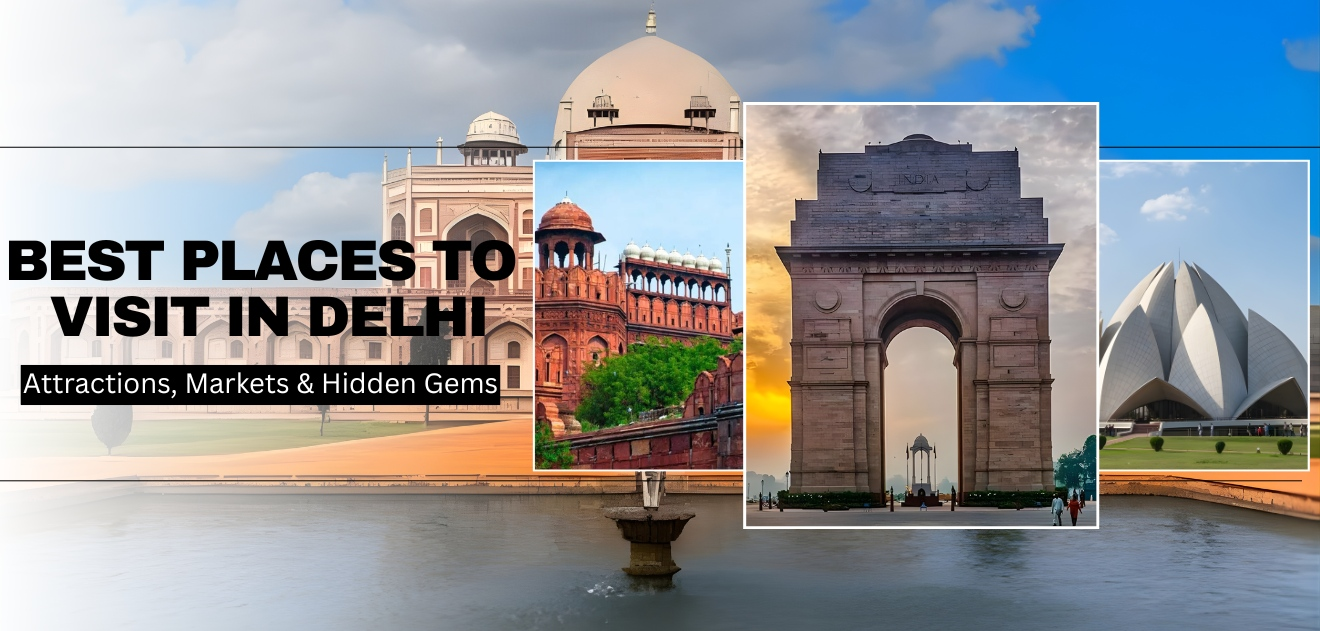
Best Places to Visit in Delhi: Famous Monuments, Markets & Hidden Gems
Delhi is not a city that sells comfort. It sells context. If you’re looking for the best places to visit in Delhi, understand this first: the city doesn’t reward rushed travelers or people chasing picture-perfect moments. It rewards those who want to understand how history, power, chaos, and daily life overlap in one place.
This travel guide is meant for those who want clear, factual information rather than exaggerated descriptions of all that Delhi has to offer. It lists the best-known historical sites in Delhi as well as the best-known attractions, marketplace, and lesser-known attractions that also provide meaning to most visitors, regardless of how you are traveling through Delhi independently or through a Luxury Urbania on Rent in Delhi. Ultimately, this article will help determine what aspects of each attraction will refer to time; thus, the length of your travels.
Why Delhi Is Still One of India’s Most Important Cities
Delhi is a city that has always existed as a series of cities that were built over a long time, with new emperors building upon, or destroying, what had come before them. Therefore, it is common to see old ruins sitting right next to metro stations, and Mughal emperors' tombs surrounded by large, modern office towers.
Delhi is very busy, politically intense, and can be overwhelming at times. On the other hand, Delhi has more historical evidence than any other capital city around the globe. If you take a measured approach and have realistic expectations, Delhi will offer an experience that will have a lot more impact than many locations around the world.
Historical Places in Delhi That Actually Matter
Delhi’s history isn’t decorative—it’s structural. These monuments aren’t here to impress tourists with beauty alone; they explain how power operated, shifted, and collapsed over centuries. If you remove these sites, Delhi stops making sense. These are the historical places in Delhi that genuinely matter, not just because they are old, but because they shaped what the city became.
Red Fort (Lal Qila)
The Red Fort was not built as a palace—it was built as an administrative capital. Every major Mughal decision passed through this complex. What visitors often miss is that the fort wasn’t designed for comfort; it was designed for control.
- The Diwan-i-Aam and Diwan-i-Khas were political spaces, not ceremonial halls
- The fort’s layout reflects strict hierarchy and surveillance
- Its decline mirrors the decline of Mughal authority
Today, it remains one of the most famous places in Delhi, but its real value lies in understanding how centralized power once functioned in the city.
Qutub Minar Complex
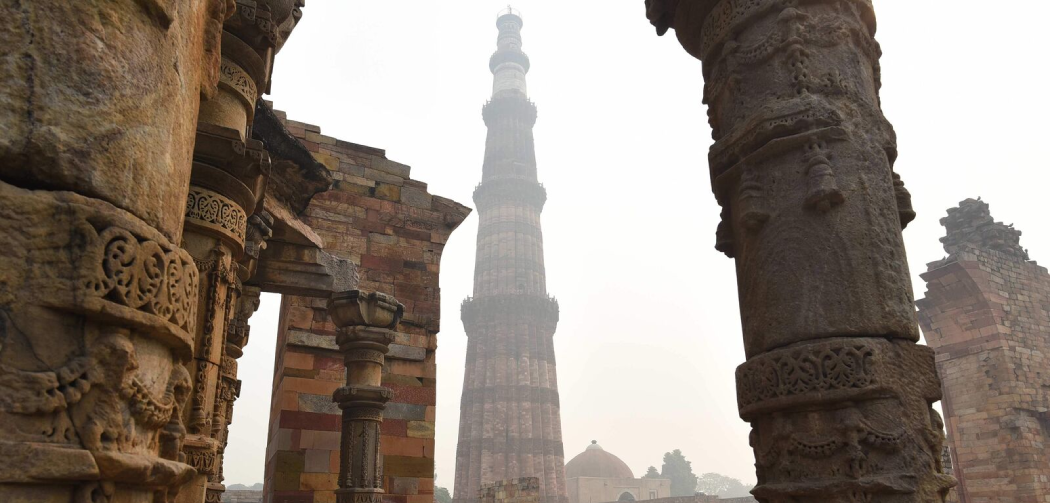
Qutub Minar is not just a tall tower—it marks a turning point. This complex represents the start of a new political and religious order in North India.
- Built using materials from older structures, showing transition and conflict
- The Quwwat-ul-Islam Mosque reflects early Indo-Islamic architecture
- Inscriptions openly declare conquest, not coexistence
Humayun’s Tomb
Before Humayun’s Tomb, Mughal structures were inconsistent. This monument standardized Mughal aesthetics.
- Symmetry, gardens, water channels—all intentional
- Persian influence is clearly visible
- Later monuments, including the Taj Mahal, followed this blueprint
Unlike many famous places in Delhi, this site is not chaotic. It reflects order, planning, and permanence—qualities the empire was trying to project.
Purana Qila (Old Fort)
Purana Qila is often ignored because it doesn’t market itself aggressively. That’s a mistake.
- Linked to ancient Indraprastha from the Mahabharata era
- Later reused by Afghan and Mughal rulers
- Shows how strategic locations are reused across centuries
This is one of the few historical places in Delhi that connects mythological, medieval, and Mughal timelines in one space.
Famous Places in Delhi for First-Time Visitors
Many new tourists visiting Delhi for the first time think that they must try to experience everything that is happening in the city. This is not a successful way to experience the city as it has been built on top of one another and is stretched out over many square miles. New tourists will be best served by visiting the well-known locations that offer a clear understanding of Delhi’s past, size, and daily life, with no diversions.
India Gate
India Gate is not about architectural complexity—it’s about presence. Built as a war memorial, it represents colonial power, sacrifice, and post-independence identity all at once.
- Best visited early morning or after sunset
- Midday heat and crowds reduce the experience
- Evening visits show how locals actually use public space
For first-time visitors, India Gate sets the tone for central Delhi and helps you understand the city’s civic core.
Akshardham Temple
Akshardham shows modern India’s approach to cultural presentation.
- Highly detailed stone work
- Educational exhibitions
- Long entry process
It requires time and patience, but gives first-time visitors a structured cultural overview.
Chandni Chowk
This is where first-time visitors either understand Delhi or decide they’ve had enough.
- Dense crowds and narrow lanes
- Historic markets and street food
- Not suitable for rushed schedules
Visit with intent. Wandering without a plan leads to exhaustion.
Jama Masjid: Context for Old Delhi
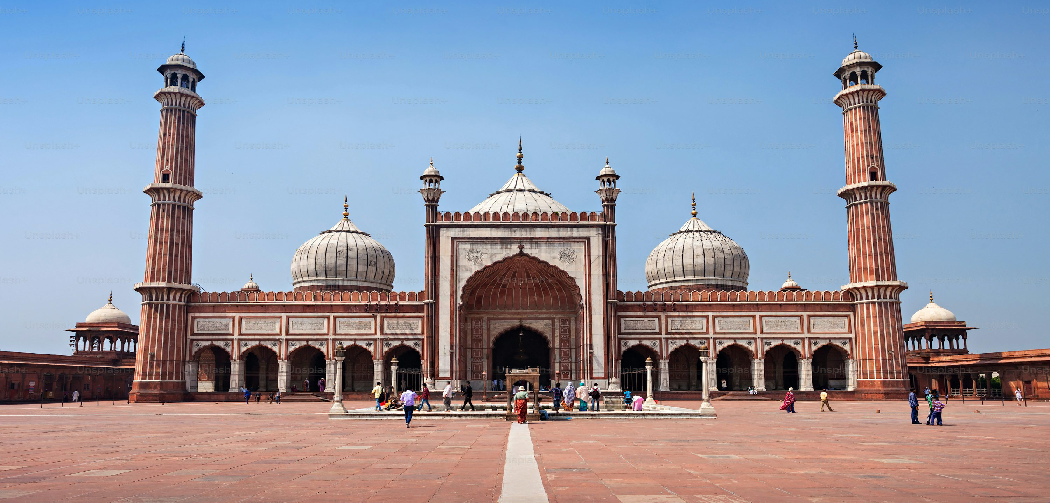
Jama Masjid adds scale and perspective to Old Delhi.
- Massive courtyard
- Active religious site
- Offers elevated views of the surrounding area
It helps first-time visitors understand the religious and social structure of Shahjahanabad.
Hidden Gems in Delhi (Less Noise, More Substance)
Delhi is often judged by its most crowded corners. That’s a mistake. Away from the monuments and markets, the city has quieter spaces that explain its character far better than headline attractions. These hidden gems aren’t secret—they’re simply ignored by rushed itineraries. If you want depth without constant noise, these places matter.
Mehrauli Archaeological Park
This is one of the most important yet overlooked historical zones in the city.
- Spans multiple dynasties and centuries
- Tombs, mosques, stepwells, and ruins in open terrain
- Minimal tourist traffic
Agrasen ki Baoli
Hidden behind office buildings near Connaught Place, this stepwell is one of Delhi’s most atmospheric spaces.
- Narrow staircases and deep stone levels
- Sharp contrast between old and modern surroundings
- Short visit with high visual impact
It doesn’t require time or effort, but it delivers perspective.
Best Time to Visit Delhi (No Pretending)
- October to March: Best weather, peak crowds
- April to June: Extreme heat, not recommended
- July to September: Monsoon, inconsistent travel
The weather directly affects your experience.
Getting Around Delhi: Transport Is Not Optional Planning
Delhi is not a walkable city. Its major attractions are spread across vast distances, often separated by dense traffic zones and unpredictable travel times. Poor transport planning doesn’t just slow your trip—it reshapes it. Missed sites, rushed visits, and unnecessary fatigue are usually transport problems, not itinerary problems.
Key advantages:
- Comfortable seating for long hours
- Strong air-conditioning
- Space for luggage
- Fixed schedules and fewer delays
Travelers extending their journey toward Jaipur often continue with services like Force Urbania Rental Jaipur, maintaining comfort and consistency across cities.
Final Perspective
Delhi is not designed to impress quickly. It’s designed to endure. Empires rose here, systems collapsed here, and cultures merged here. If you focus on the move smartly and avoid unrealistic expectations, the city delivers depth that few destinations can match.
From major historical places in Delhi to crowded markets and quiet ruins, Delhi presents India without filters. And whether you explore it independently or with a Luxury Urbania Rental, the quality of your experience depends on planning—not promises.