

Char Dham Yatra from Jaipur by Luxury Force Urbania
The Char Dham Yatra is one of the most sacred journeys in Hinduism, covering four high-altitude shrines in Uttarakhand — Yamunotri, Gangotri, Kedarnath, and Badrinath. From Jaipur, the journey covers over 2,000 km each way and passes through terrain that changes dramatically from Rajasthan plains to Himalayan mountain roads.
The Force Urbania is the right vehicle for this journey. It combines group capacity with a ride quality that holds up across 12 to 15 days of continuous travel through varied terrain. Our drivers are experienced with mountain routes and shrine access logistics at every Dham on the circuit.
- 9, 10, 12, and 17 seater Urbania available
- Same driver from Jaipur to the final Dham and back
- Full AC cabin with push-back seating
- Mountain road experience on every driver assigned
- Rate confirmed before departure, no hidden additions
- Vehicle serviced before every Char Dham trip
Char Dham Yatra Booking Form
Free quote within 2 hours — No advance payment required
The Four Dhams of Uttarakhand
Each Dham has its own character, altitude, and access requirement. Here is what to expect at each shrine on the Char Dham circuit.
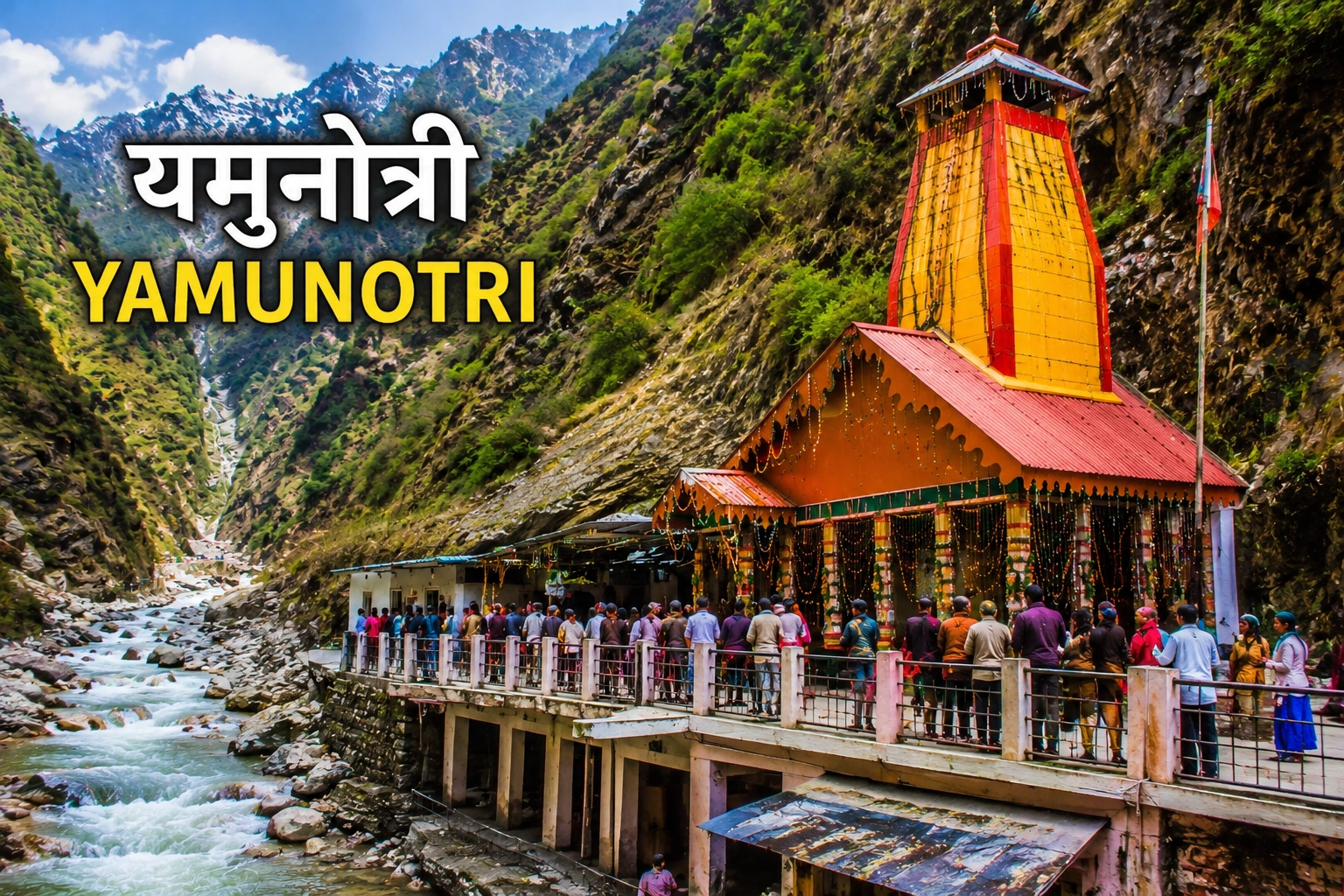 Dham 1
The source of the Yamuna River and the westernmost Dham on the circuit. The shrine is dedicated to Goddess Yamuna and sits at 3,293 metres. There is no motor road to the temple itself. The drive goes to Janki Chatti, from where a 6 km trek or palanquin covers the remaining ascent to the shrine.
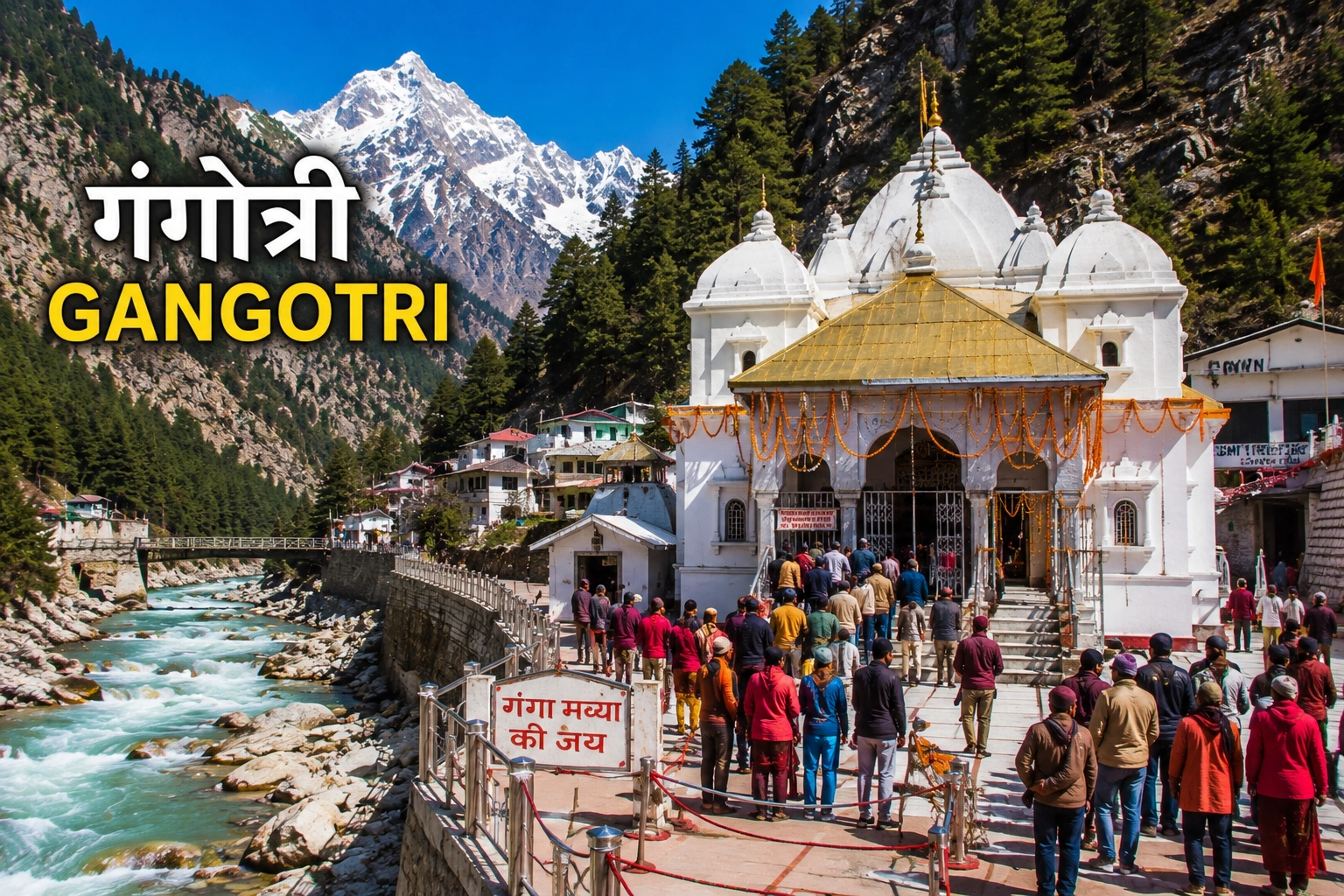 Dham 2
The origin of the Ganga River and one of the most visited shrines in Uttarakhand. The temple at Gangotri is directly accessible by road at 3,100 metres, which makes it the most convenient Dham on the circuit for elderly pilgrims or those with mobility concerns. The Gangotri Glacier, origin of the actual river, is 19 km further at Gaumukh.
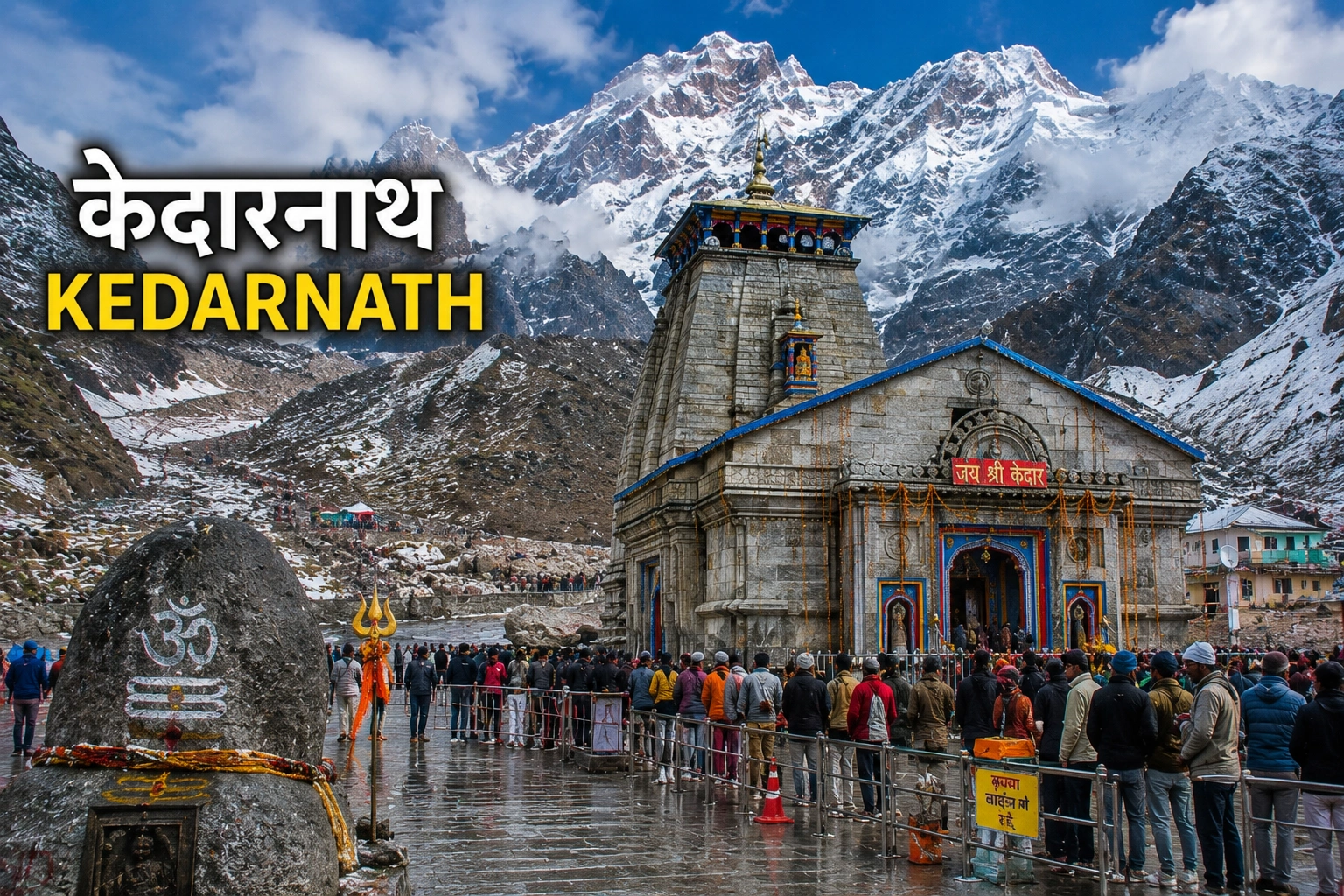 Dham 3
One of the twelve Jyotirlingas and the most demanding Dham on the circuit. The temple sits at 3,583 metres. The drive takes pilgrims to Gaurikund, from where a 16 km trek ascends to the shrine. Ponies, palanquins, and helicopter services (from Phata, Sersi, and Guptkashi) are available. Our driver knows all the options and helps plan accordingly.
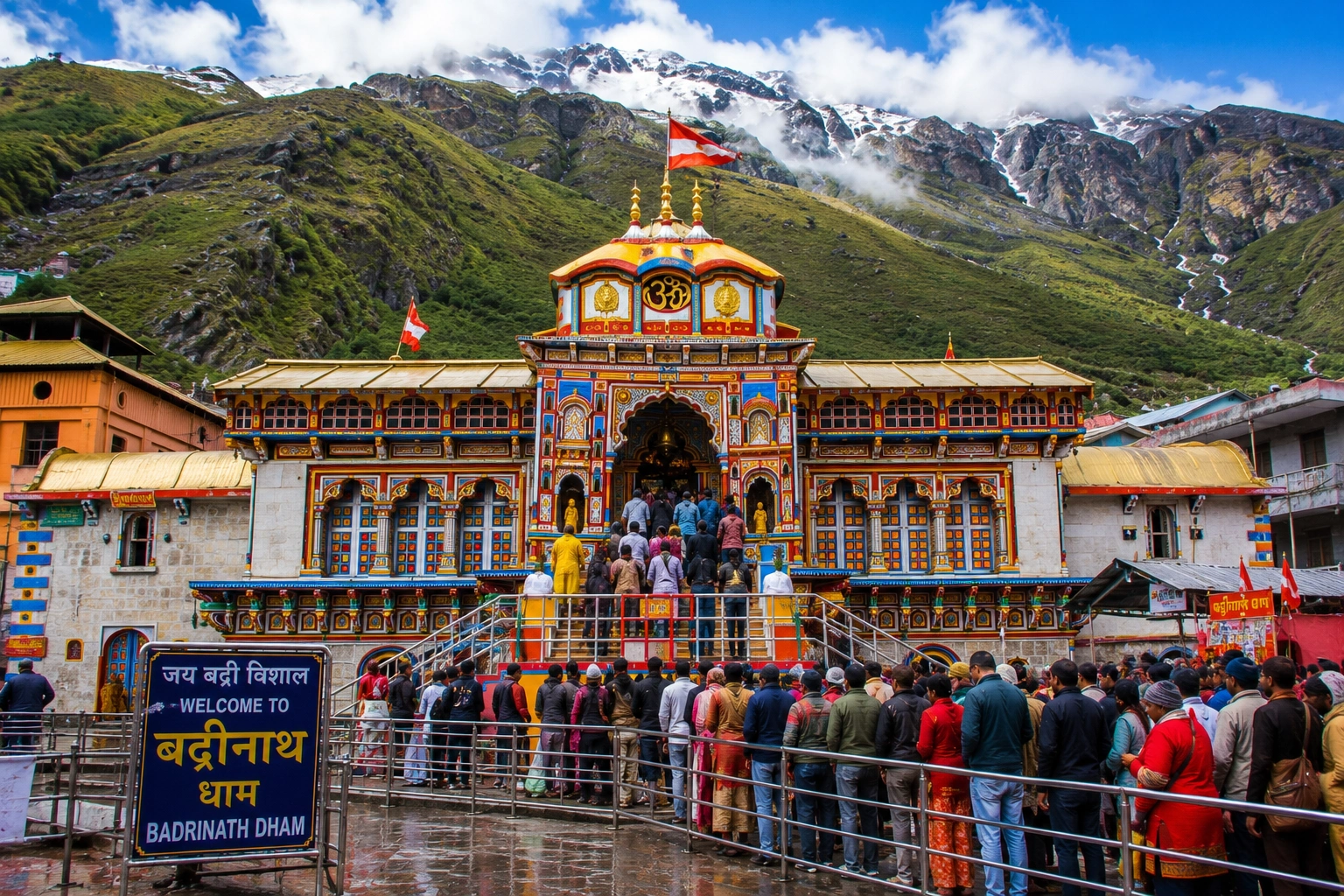 Dham 4
Dedicated to Lord Vishnu and directly accessible by road at 3,133 metres, Badrinath is the most visited of the four Dhams. The temple sits between the Nar and Narayan mountain peaks with the Alaknanda River flowing below. Mana village, the last Indian village before the Tibet border, is 3 km from Badrinath and worth a short walk after the darshan.
Suggested Char Dham Yatra Itinerary from Jaipur
A 13 to 14 day plan that covers all four shrines comfortably without rushing any stage. The sequence follows the traditional order — Yamunotri first, Badrinath last.
Depart Jaipur early morning on NH 48 toward Delhi, then continue north to Haridwar. Arrive by afternoon. Haridwar is the gateway to the Char Dham and a natural place for the first evening of the yatra. Ganga Aarti at Har Ki Pauri in the evening is a fitting start to the pilgrimage. Overnight in Haridwar or Rishikesh.
Drive up toward Yamunotri via Dehradun and Mussoorie or via Rishikesh and Chamba. The road climbs steadily from the valley into the first ranges of the Himalayas. Barkot is the closest overnight halt to Janki Chatti, the road head for Yamunotri. Alternatively, stay in Uttarkashi if you want a slightly longer buffer for the next morning.
Drive to Janki Chatti and trek to Yamunotri for darshan. The path passes through forests with the Yamuna River rushing below. Return to Janki Chatti and drive to Uttarkashi for the night. Uttarkashi is a bustling temple town on the Ganga with good accommodation and food options for pilgrimage groups.
Drive to Gangotri via Harsil, one of the most scenic valleys in Uttarakhand. Gangotri temple darshan. The temple is directly accessible by road, which makes this the most comfortable Dham visit for elderly group members. Overnight at Gangotri or drive back to Uttarkashi depending on accommodation availability at the shrine.
A long driving day from Gangotri back toward Uttarkashi and then south before climbing again toward Rudraprayag and Guptkashi. This is the transition stage between the Yamunotri-Gangotri circuit and the Kedarnath-Badrinath circuit. Guptkashi or Sitapur are the standard overnight halts before Kedarnath. The Vishwanath Temple at Guptkashi is worth visiting in the evening.
Drive to Gaurikund early morning and begin the ascent to Kedarnath. The trek is 16 km one way at high altitude and takes 4 to 6 hours depending on pace. Ponies and palanquins are available at Gaurikund. Helicopter options from Phata or Sersi cut the journey significantly but require advance booking during peak season. Our driver assists with all logistics at Gaurikund. Overnight at Kedarnath or trek down for overnight at Gaurikund.
Trek down from Kedarnath or Gaurikund and drive toward Badrinath via Rudraprayag, Karanprayag, Chamoli, and Joshimath. The five Prayags on this stretch — Devprayag, Rudraprayag, Karanprayag, Nandprayag, and Vishnuprayag — are each a confluence of major Himalayan rivers and significant religious sites in their own right. Stop briefly at whichever timing allows.
Morning aarti and darshan at Badrinath temple. After darshan, drive or walk 3 km to Mana village, the last Indian village before Tibet, where the Saraswati River meets the Alaknanda. The cave associated with Vyas Muni and the natural rock arch called Bhim Pul are both within Mana village and worth visiting. Return to Badrinath for overnight or begin the return journey to Joshimath.
The return drive from Badrinath to Jaipur is typically split across 2 to 3 days depending on the group's energy and preferred halts. Rishikesh or Haridwar for overnight on Day 9 or 10, then continue to Delhi or Jaipur directly on Day 10 or 11. Many groups add a Haridwar Ganga bath and a final aarti on the return leg before completing the yatra. The total trip duration from Jaipur and back is 12 to 14 days.
Force Urbania Variants for Char Dham Yatra
All variants are available for the Char Dham circuit from Jaipur. Choose based on your group size and comfort preference.

- Ideal for 7 to 8 pilgrims with luggage
- Full AC cabin
- Good boot space for extended trips
- Comfortable on mountain roads

- Most popular for family groups
- Full AC, push-back seats
- Spacious cabin for 12 day journey
- Mountain road tested

- Best for temple committees and societies
- Large combined luggage capacity
- Full AC, comfortable seating
- Experienced mountain driver

- Large pilgrim groups and societies
- Maximum capacity Urbania
- Full AC, all push-back seats
- Shimla and Haridwar routes
Char Dham Yatra Package Rates by Urbania
All rates are per km. The actual package cost depends on total distance covered, number of days, and overnight halts. Call us for a confirmed quote for your group size and itinerary.
9 and 10 Seater Urbania
Rs. 30/km| Starting Rate | Rs. 30 per km |
| Outside / Outstation Rate | Rs. 30 per km |
| Hill Station Charge | Extra per km |
| Toll, Parking and Night Charge | Extra at actual |
| Minimum Day Rate | 250 km per day |
| Driver Allowance | Rs. 300 per night |
| Approx Total Distance (full circuit) | 4,500 to 5,000 km |
12 and 17 Seater Urbania
Rs. 28/km| Starting Rate | Rs. 28 per km |
| Outside / Outstation Rate | Rs. 28 per km |
| Hill Station Charge | Extra per km |
| Toll, Parking and Night Charge | Extra at actual |
| Minimum Day Rate | 250 km per day |
| Driver Allowance | Rs. 300 per night |
| Approx Total Distance (full circuit) | 4,500 to 5,000 km |
Toll charges on the Jaipur to Uttarakhand route are approximately Rs. 1,500 to 2,000 for the full circuit and are paid at actual. Helicopter services for Kedarnath and other optional upgrades are arranged separately.
What is Included in the Package
The same Force Urbania from Jaipur pickup to final return drop. No vehicle change mid-route. Serviced before departure for a 12 to 15 day trip.
Driver with mountain road experience assigned specifically for the Char Dham route. He knows parking at each shrine, trek logistics, and accommodation options at every halt.
The per km rate includes fuel. No separate fuel billing. The driver manages all refuelling stops across the entire circuit from Jaipur and back.
The cabin remains fully air conditioned across all stages. At high altitude the temperature drops significantly, and the heater function of the AC system keeps the cabin warm during early morning starts from mountain halts.
Basic first aid, altitude medicine (Diamox), and an emergency contact card are carried on every Char Dham trip. Driver is briefed on the nearest hospital or medical centre at each stage of the route.
Our office contact remains reachable for the duration of the trip. Any route change, additional stop, or emergency is handled with one call to our team. No app, no ticket system.
Important Tips for Char Dham Yatra 2026
The Uttarakhand government requires pilgrims to register on the official Char Dham Yatra registration portal before the journey. Registration is free. Our team helps with the process and shares the portal link before your departure.
The shrines open in late April or early May and close in October or November depending on the Muhurta announced by the temple committees. July and August are monsoon months with heavy rain and landslide risk on mountain roads. September and October offer the best weather and least road disruption.
Helicopter services for Kedarnath from Phata, Sersi, and Guptkashi book out weeks in advance during peak season. If your group includes elderly pilgrims or those unable to trek 16 km, booking the helicopter before your departure date from Jaipur is strongly recommended.
Jaipur to Haridwar is plains travel in warm weather. Kedarnath and Badrinath can be close to zero degrees even in summer. Pack a mix of light clothes for the first two days and warm layers, woollens, and waterproof jackets for the higher altitudes.
Airtel and Jio have very limited or no coverage beyond Rishikesh in most mountain areas. BSNL has the best coverage in Uttarakhand's high-altitude zones. Carry a BSNL SIM or have at least one in the group. Our driver has local contacts who can assist if communication becomes necessary in remote areas.
Mountain roads are subject to landslides, weather closures, and temple crowd management delays. A 12 to 14 day plan should include at least 1 to 2 buffer days built into the schedule. Attempting the full circuit in under 10 days from Jaipur and back is possible but leaves no room for delays at any stage.
Why Force Urbania is the Best Vehicle for Char Dham Yatra from Jaipur
The Char Dham Yatra from Jaipur is a journey of approximately 4,500 to 5,000 km covering Rajasthan plains, Uttar Pradesh highways, Uttarakhand foothills, and high-altitude Himalayan mountain roads. No single vehicle type handles all of these terrain categories equally well, but the Force Urbania comes closest for groups of 8 to 15 pilgrims.
The Urbania's ground clearance handles the broken road sections that appear regularly between Gaurikund and the Kedarnath approach, and between Joshimath and Badrinath during or after monsoon. The diesel engine performs reliably at altitude, unlike petrol engines which lose power more sharply as oxygen levels drop above 2,500 metres. The cabin height allows passengers to stand, move, and rest in ways that are genuinely impossible in a smaller vehicle across a 12-day journey.
For pilgrimage groups that include elderly members, the Urbania's seating height is significantly more comfortable than a Tempo Traveller for entry and exit at the multiple stops across the route. The push-back seating allows passengers to recline during long driving days. The roof-mounted AC serves all rows, which matters on the Jaipur to Haridwar stage where summer temperatures can be high.
Char Dham Yatra from Jaipur in 2026: Season and Opening Dates
The Char Dham shrines follow a traditional Vedic calendar for their annual opening and closing. In 2026, the shrines are expected to open in late April or early May. Yamunotri and Gangotri typically open on Akshaya Tritiya, which falls in late April or early May. Kedarnath opens on the auspicious date announced by the pujaris at Omkareshwar Temple in Ukhimath, typically a few days after Akshaya Tritiya. Badrinath opens last, generally within a week of Kedarnath.
The peak pilgrimage months are May, June, and late September through October. July and August see the least activity due to monsoon, with some years seeing road closures for 10 to 15 days at a stretch. The shrines close in October or November: Gangotri and Yamunotri on Diwali, Kedarnath on Kartik Purnima, and Badrinath a few days after Kedarnath. Our team updates confirmed 2026 opening and closing dates before every booking is finalised.
How to Book Char Dham Yatra by Urbania from Jaipur
Call us with your group size, preferred departure date, and vehicle preference. We confirm availability, quote the applicable per km rate, and walk through the itinerary day by day with you on the call. For groups with elderly pilgrims, we specifically discuss Kedarnath access options including helicopter services and horse or palanquin arrangements at Gaurikund. No advance payment is required to confirm the booking. Driver details and vehicle number are shared 24 hours before departure.
For the 2026 season, bookings are accepted from February onwards. Groups planning to travel in May and June during peak season are advised to book at least 3 to 4 weeks in advance to ensure the right vehicle variant and an experienced mountain driver are available for their dates. Visit our Luxury Urbania Rental homepage to explore all vehicle options and tour packages available from Jaipur.
Why Choose Luxury Urbania Rental for Char Dham
Our drivers assigned for Char Dham trips have experience on the Uttarakhand mountain routes. They know the road conditions between Uttarkashi and Gangotri, the Gaurikund approach, the Joshimath to Badrinath stretch, and where to stop and rest on difficult sections.
We specialise in group travel across Rajasthan and North India. The Char Dham Yatra is our most significant long-distance pilgrimage route. Every detail from vehicle servicing to driver briefing is handled specifically for the demands of the full circuit.
Rate confirmed at booking does not change mid-trip. Toll and parking are paid at actual and discussed before departure. No surprise additions after the yatra ends. The total estimated cost is shared before you confirm.
Every Force Urbania going on a Char Dham trip is serviced at least 7 days before departure. Engine, tyres, brakes, AC, and emergency tools are all checked. We do not send vehicles that have not been prepared for a 5,000 km multi-terrain journey.
Our contact number remains reachable for the full duration of the yatra. Any situation on the road — a delay, a route change, a vehicle concern — is handled with one call to our team. Driver is also briefed on emergency protocols before departure.
Our fleet is prepared for the 2026 Char Dham season. Bookings are accepted from February 2026 onwards. We track opening dates for all four shrines and update every group before their departure to ensure they arrive at each Dham when it is accessible.